Chicago Motors
Deliverables
- Sketches of your design in three views
- Include one side view sketch
- Submit your presentation in ONE single file
- Your design presentation may be saved as a jpg, png, or gif
- Design entries should be under 1MB
Engineering Requirements
Please LABEL the following requirements in your presentation:
- 2-5 occupants including driver
- Low to the ground. For the sake of speed and aerodynamics, design a car that is low to the ground.
Please include the following requirements in your presentation:
- 4 Wheels
- Roadcar - legal for street use
- Tail lamp vertical distance from ground to centerline of light not less than 15 inches (381 mm), or more than 72 inches (1828 mm)
- Headlight vertical distance from ground to center line of light not less than 22 inches (559 mm) or more than 54 inches (1372 mm)
- Turn Signal lamp vertical distance from ground to centerline of light not less than 15 inches (381 mm)
Engineering Guidelines:
- This design should be fast and exciting to drive, but also affordable.
- This vehicle should have excellent aerodynamics to meet performance goals as well as deal with frequent and changing winds.
- While fast, this vehicle should also be reasonable in bad weather.
- This car must be nimble. Chicago is known for having "pot holes" on the roads and highways. The dramatic high and low temperatures, along with the use of corrosive salt to melt ice, cause the roads to crumble in some places. Be sure your design will be able to navigate these inconveniences.
Competition Guidelines
- Read this entire page to get inspired!
- Download and review the ignition kit
- Submit your best design
- Please familiarize yourself with the licensing agreements
Prizes
- 1st Place: $1,500USD, 2nd Place: $300USD, 3rd Place: $200USD
- First Place Winner receives A Winner's medal and Highlighted Status on the Local Motors web site
Competition Type
Stage 1 - Sketch Competition
Start Date: Wed January 14, 2009 12:01am EST (-4 UTC)
Submission Deadline: Tue January 20, 2009 11:59pm EST (-4 UTC)
Competition Description
Chicago is known as the “Windy City”, “City of Broad Shoulders” and “Second City”. These names refer to the climate of this metropolis that sits on the edge of a Great Lake, gusty and exposed to the elements. Chicago has earned a heritage of hard work and built its reputation back in early industrial times of the 1800s. This city also has a pained history of incredible catastrophe. In 1871, a huge fire broke out and burned down most of the city. For this reason, after the city rebuilt, Chicago became known as the “Second City”.

And here it is today, known for beaches, wind and all that a city has to offer with a heritage of hard work and rebirth, Chicago is resilient and beautiful.
Though the new and old architecture is remarkable, it is the people of this city and not necessarily the buildings, art, or museums that make it special. The early part of the 20th century landed Chicago on the map for a different reason: The Midwestern city became overrun by Al Capone’s mob, and organized crime was rampant. Capone’s mob was ruthless and cruel; they were not romantic heroes, though at times, Capone used his position to do positive things. While violence and crime is no longer tolerated, and the mob is either hiding in the shadows or gone, Chicago still has a temperament of rule-breaking, if only for the common good. Chicagoans will accomplish what needs to be done, through ordinary means or others.
Are you wondering what good Capone’s mob accomplished? Certainly his positive impact was not made in prohibition era whiskey. His impact was made in depression era milk. In 1932 rules changed, and alcohol was no longer outlawed. This meant that Capone and his men had to find a new form of income. Any businessman will tell you to find a product to sell that people need on a daily basis; that is what Capone did when he entered the dairy milk business. Milk had a better profit margin than whiskey!
The Great Depression began in 1929, and stretched through most of the 1930s. Milk and meat were household luxuries that few could afford. Jobs and food were hard to come by, even in the great American cities like New York and Chicago. Capone fed many Chicagoans by hosting soup kitchens, and he used his weight to convince milk companies to donate milk for free. The problem was that milk companies were donating spoiled milk, and people were getting sick from it. Capone demanded an expiration date be added to each container of milk, and that tradition continues today. Yes, Capone is responsible for implementing expiration dates on milk! It is rumored that some lives were saved by the generosity of this criminal. And it is also true that Capone had “non-traditional” means of conducting business.
Whether for strict profit, or for humanistic reasons, Capone created a milk company. The $50,000 used to start Meadowmoor Dairies, Capone’s company, was extorted. Murray Humprey, aka “The Hump” kidnapped the president of the milk drivers union, and demanded $50,000 from the union’s agent for his safe return. With this $50,000, they started Meadowmoor Dairies.
According to some history books, the Milk Drivers Unions of Chicago in the early 1930s held a monopoly on the industry, and greatly drove up prices making milk unaffordable for many. When Meadowmoor began, Capone employed only non-union workers to lower the price of milk and make it accessible to even those who were suffering during the Great Depression. It took a something as powerful as Capone to bend the monopoly. For this, the city thanked him.
Now, it is the year 2009. Chicago has grown into a thriving metropolis, accounted as the third largest city in the United States, and the third largest gross revenue of any city in the U.S. Even this city has been affected by the automotive crisis. Like the milk industry of the 1930’s, it is only two or three large automotive companies that have a strong hold on just about all automotive industry jobs in the Midwestern states, and the jobs are waning. Like milk, cars are necessary; as milk nourishes a growing body, cars are a means for freedom. It is time for a change, for innovation, for new jobs in the city of Chicago and a force, a positive impact, as strong as the mob that once was.
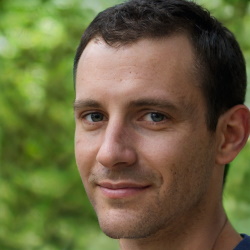
Our story begins with an introduction to a native Chicagoan,
No one knows this city better than Tom. Tom is a good guy, though his family history is laden with mob associations. He drives fast, and he does not follow the rules.
This is Tom's description and vision for Chicago...
Tom: "This city is full of good people, but we don’t always follow the rules. We drive fast, and we work hard. From the Sears Tower to Michael Jordan, this city is full of the biggest and the best.
And we love to be entertained. Chicago was home to some of our country’s funniest comics, and our theater culture is legendary.
Chicago was the birthplace of Walt Disney, of Michael Jackson – great entertainers.
Man, do we love our food. Chicago deep dish pizza from Lou Malnatti’s, and Giordanno’s is legendary. We know how to do hotdogs right, too. Don’t even think of putting ketchup on a Chicago ‘dog. Mustard only.
We love beautiful things, and nature. From the architecture of Frank Lloyd Wright, to the collection at the Chicago Art Institute, we appreciate the finer things. We work hard.
Chicago is home to many, many headquarters and is known as the first home to the American advertising and marketing industry.
But just about every industry is represented in Chicago. We have lots of blue-collar service workers too: some of the best mechanics, construction contractors and restaurant workers live here. Right now Chicago is building what will be the tallest building in the world, the Chicago Spire. It will be 2,000 feet tall.
You may know Chicago for its politicians, both good and bad. This is the previous home of Barack Obama, the US President Elect. This is the home of Rod Blagojevich, the guy who tried to sell Obama’s seat in US Senate. Not so smooth, that guy. And then there is the Daley legacy. Richard J. Daley was mayor of Chicago from 1955-1976; then in 1989, Daley’s son, Richard M. Daley, took over and is still Mayor today. The family is a legacy.
Richard M. Daley is the guy who made Millennium Park happen. Beautiful park, right next to the Art Institute. He really helped increase the city’s tourism industry, good guy. Some say he has controversial practices, but we don’t care. He does good things for this city.
For those that don’t know, Chicago experiences the four seasons to the fullest extent: harsh winters and hot summers on the beach, we get it all. We love to drive, and we often have long commutes.
Lakeshore drive is my favorite strip of road; it runs along Lake Michigan and has the most beautiful view of the cityscape.
We have a good mix of young adults and families that live in Chi-Town. We are a stone’s throw from Wisconsin, great camping there; we like long weekends. Sometimes we like to go to Michigan for holidays as well.
We need you to move forward in a way the OEM’s will not: bring jobs back to Chicago. Design a car for this city, a city with a rule-breaking history, a city of rebellious humanists with a gangster flare. We’re good-guy gangsters, and we know how to take care of our own. That’s what we want to do: we want to bring pride, jobs, fun and hot design back to Chicago automotive.
Design a car for Chicago that is hot and fast, but has room for 2-5 people. Create something for us to be proud of, and make it affordable. Make sure this car is usable in the sun and snow.
Public transit in Chicago is good, but we need more freedom. We need the freedom and pride that can only come from owning a car.
Thanks for hearing me out. Don't forget to stop by my profile and ask questions or leave comments. I'm always available. We in Chicago appreciate anything you can do for our city, and we hope you will visit someday." - Tom O. Rascoll